
Explorations of the philosophy and theology of music as the hidden Language of Nature
THE VALE OF THE MUSES – Nature and Harmony in 18th-century England
This is is a study of the forgotten philosophy of Nature which followed the ideas of Lord Shaftesbury. It begins at Shugborough and asks how the creators of such gardens understood Nature. This lead to the key idea shared by Isaac Newton, James Harris, Floyer Sydenham and Giuseppe Tartini that the guiding law in Nature was Harmony.
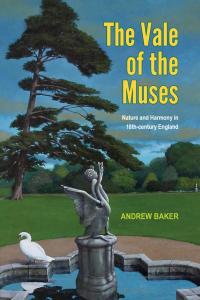
The Vale of the Muses is available from Amazon
HIDDEN MUSIC – A Franciscan musical theology
Beginning with personal experience Hidden Music asks how is it that things, music, places communicate their individual quality or character to us? The answer has to be that everyting shares a hidden language – the HIdden Music. This book focuses on Franciscan tradition and shows that St Francis and his followers were the flowering of a much older tradition in which the inherent harmonies in Creation wove works, music drawn by love to find unity.

Hidden Music is Available from Amazon here
The Great British Bookshop link:
Hidden Music – A Franciscan musical theology
TALKS AND ESSAYS
THE LYRE THE MUSICIAN AND THE QUEEN OF HEAVEN 31082026
This essay takes us back to the very beginning of the story, the sacred lyre which was a model of the cosmos – the diatonic scale – from the bronze age king KInyras to the Renaissance, explaining how the lyre carries with it the mystery of the muses and the archetypal qualities we experience in nature and the soul – and in the ancient musical modes. It’s quite important. The starting point of the story is research by John Curtis Franklin.
This is expanded from the script of talk I gave to Rilko 28th March 2025.
WILLIAM SHAKESPEARE, FRANCESCO GIORGI AND THE HARMONY OF THE WORLD
A recorded version of a talk given to the Temenos Academy January 27th 2025. This explores the connection between Shakespeare’s the Merchant of Venice and De Harmonia Mundi by the great Renaissance Francsican Francesco Giorgi suggested by Dame Frances Yates. The talk and article also looks at other signs of the Franciscan influence on Shakespeare.
Here is a pdf of the article published in the Temenos Academy Review 2025
ZARLINO AND THE MUSIC OF NATURE 29102025 version
This continues the story of the musical modes from the Renaissance – Zarlino and his new system of 12 modes – musical magic in 16th century France – Poussin and the modes – Tartini and the music of nature.
The fundamental archetypes wuthin creation as discussed in Hidden Music and the Vale of the Muses, with definitions by Franciscan writers Juan Gil De Zamora, Joseffo Zarlino and Francesco Giorgi
THE RAVELLO DIALOGUES 04022026
Conversations with the muses (for that is who they are) over twenty years, discussing the ideas behind the Hidden Music.
THE FRANCISCAN SPIRIT IN 17THC ENGLAND
A chapter on traces of Franciscan tradition which surived the Reformation in
Celebrating 800 Years of Franciscans in the British Isles (Franciscan Publising 2024)
This includes Shakespeare, John Smith, Peter Sterry and Thomas Traherne.
SAINT CECILIA AND THE NOVEMBER MYSTERIES – The story of Cecilia, how she became patron saint of muisc and how she saved English music as the figurehead for opposition to puritans who objected to church music,
MUSIC
These are works exploring the modes which are discussed in the books, essays and talks on this page.
An Octave for Peace – for harp, in the eight Gregorian modes, in Gregorian order. Strictly diatonic.
A Constellation for string orchestra, 12 studies on Zarlino’s modes.
Clarissa’s tune for Elizabeth Carter’s Ode to Wisdom, from Samuel Richardson’s novel.